Key Elements for Successful External Digital Advertising Installation
Wiki Article
Open-Air digital advertising boards has steadily become a commonly adopted messaging tool among companies, public agencies, and organizations pursuing enhanced exposure alongside real-time information delivery. Different from interior displays, exterior networked displays must function dependably across changing environmental exposures while continuing to maintaining clear image clarity. A effective implementation relies upon preparation, infrastructure alignment, and an evaluation related to location-based environmental requirements. Factors like positioning analysis, environmental conditions, as well as technical support each influence system performance. Handling these considerations during planning serves to lower service problems and also promotes ongoing system stability.
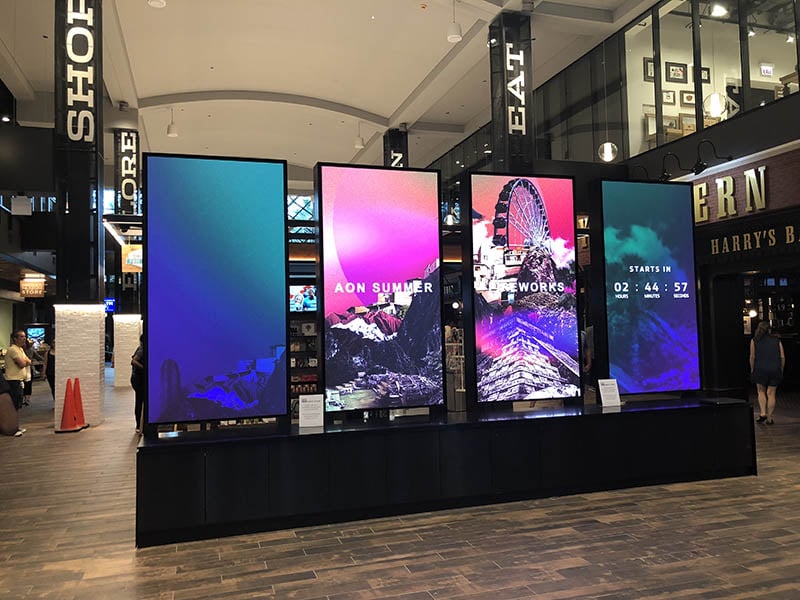
A primary considerations related to exterior smart signage setup remains site selection decision-making as well as audience visibility. Proper installation placement of the digital display must align to foot patterns, traffic driver visibility, as well as audience range. Screen size, image resolution, as well as light output ratings must match each setting to help support visual messaging is easy to read across full sunlight and low-light conditions. Surface reflection mitigation, audience viewing angles of view, along with surrounding structures also affect audience engagement. Effective location analysis drives strong information presentation and maintaining compliance with municipal planning and display standards.
Climatic defense continues to be another key vital factor related to open-air smart display solutions. Screens are required to remain enclosed within protective enclosures designed in order to withstand moisture, debris, moisture levels, and temperature fluctuations. Proper ingress protection ratings, airflow components, and thermal management solutions serve to reduce heat buildup and internal failure. Structural stability is equally important, as support hardware must withstand wind loads and vibration over extended durations. These combined defensive strategies improve display operational life while decrease the likelihood of operational interruptions.
Electrical plus communication frameworks hold a central purpose in supporting consistent digital display performance. External setups depend on proper electrical power supply, grounding solutions, and surge defense in order to shield from unexpected voltage irregularities. Network access, either wired or wireless networks, needs to maintain stable data transmission to support Look At This media changes along with platform monitoring. Cable placement along with conduit placement placement is required to adhere to recognized guidelines to safeguard from mechanical degradation along with climatic exposure. Strong infrastructure engineering maintains reliable message presentation while streamlined network management.
Content strategy and maintenance planning complete an effective exterior electronic display deployment. Displayed Recommended Reading information is expected to remain formatted to allow immediate understanding, through correct text proportions, color contrast, plus movement restraint suited for public viewing. Scheduled inspection schedules, including platform revisions, component checks, as well as surface cleaning, help maintain visual readability while system uptime. Operational monitoring solutions are used to recognize issues at early stages as well as support preventive service actions. When both engineering deployment and content oversight are aligned, external electronic visual signage becomes a as well as high-impact messaging tool.